
A common misconception is that a browser wallet is secure simply because it never takes custody of your cryptocurrency. Non-custodial control is important, but it does not make every transaction safe. The wallet protects access to signing keys; it does not automatically protect a user from a malicious website, a deceptive token approval, a compromised device, or a transaction whose consequences are poorly understood. In DeFi, security is therefore less like locking money in a vault and more like operating a control panel connected to several financial systems.
That distinction matters for users in the United States who move between Ethereum, layer-2 networks, and other EVM-compatible chains. A multi-chain wallet can reduce friction by giving one interface access to many networks, but convenience also increases the number of contracts, bridges, tokens, and permissions a user must evaluate. The central question is not whether a wallet supports many chains. It is whether the wallet helps the user understand what will happen before a signature is approved.
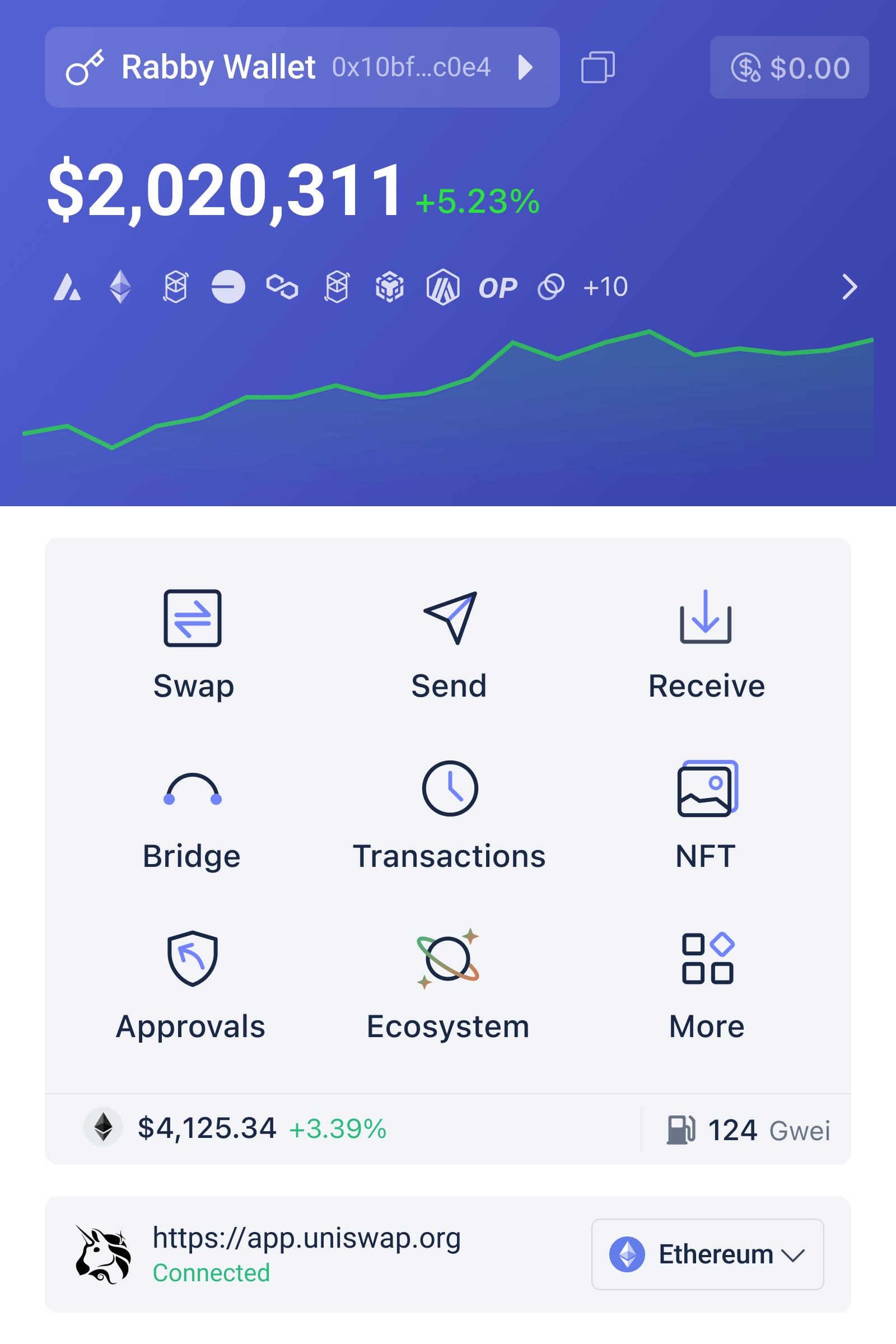
The first myth: a wallet is a shield against bad transactions
A cryptocurrency wallet performs several distinct jobs. It stores or derives the credentials needed to authorize transactions, presents balances and network information, and asks the user to approve messages or transactions. These functions are often described together as “security,” but they address different threats. Key protection helps prevent unauthorized signing. Transaction interpretation helps prevent authorized signing of something harmful. The second problem is where many DeFi losses begin.
Consider a token approval. Instead of transferring tokens immediately, an application may ask a wallet to authorize a smart contract to spend a specified asset later. That approval can be useful for trading or lending, but it may remain active until revoked or limited by its terms. A user who sees only a familiar token symbol may miss the more important question: which contract is receiving permission, and how much authority is being granted? The visible dollar value of a transaction is not always the same as its security significance.
Transaction simulation and clear signing information can improve this decision process by translating technical instructions into a more understandable preview. However, these safeguards are not magical guarantees. A simulation may depend on current blockchain state, may not perfectly represent future contract behavior, and cannot make a fraudulent website legitimate. If a user signs an unexpected message, exposes a recovery phrase, or installs a modified extension, interface warnings may arrive too late.
Why multi-chain security is a reasoning problem
Ethereum and EVM-compatible networks share important technical conventions, including broadly similar account formats and smart-contract interaction patterns. That similarity makes applications easier to access, but it also creates a dangerous assumption: the same address, token name, or user interface must represent the same risk everywhere. It does not. A familiar address can exist on multiple networks, while a token with an identical symbol may be issued by unrelated contracts.
Network confusion is a practical failure mode. A user may intend to deposit funds on one chain while the application is connected to another. A bridge may involve several contracts and a different trust model from a simple token transfer. Fees, finality, liquidity, and recovery procedures can vary by network. A multi-chain wallet can make switching easier; it cannot remove the need to check the active chain, the destination contract, and the expected asset.
This produces a useful security rule: treat chain selection as part of transaction authorization, not as a display preference. Before signing, confirm the network, the application domain, the asset contract when relevant, the recipient, and the economic result you expect. For larger amounts, a small test transaction may be rational even when it adds cost and time. The trade-off is straightforward: more verification reduces the chance of an avoidable error but increases friction. In DeFi, that friction is often a security feature rather than a defect.
Installing a browser extension without creating a new risk
The installation stage deserves the same care as the first transaction. Search results, advertisements, social posts, and copied project names can lead to imitations. A safer process begins with a source that can be independently checked, followed by inspection of the browser store listing, publisher information, requested permissions, and update history where available. Users should avoid installing an extension from an unsolicited direct message or opening a recovery phrase into a website, form, or chat window.
For readers researching how to download and install the rabby wallet browser extension, the guide should be treated as an orientation point rather than a substitute for verification. Confirm that the extension comes from the expected publisher and that the browser is installing the intended product. During setup, a new wallet should generate a recovery phrase that is written offline and stored privately. An existing wallet should be imported only into software the user has independently verified.
A recovery phrase is not a password-reset token. Anyone who obtains it may be able to recreate the wallet elsewhere, while losing it can make recovery impossible. It should never be photographed, placed in cloud notes, emailed, or entered into a website claiming to “verify” an account. Hardware wallets can reduce exposure of private keys to a computer, but they still depend on the user checking the transaction displayed for approval. They protect one layer of the process, not every layer.
A practical decision framework for DeFi users
Before approving an unfamiliar action, separate the decision into three questions. First, what authority is being granted? Is this a transfer, a token approval, a permit-like signature, a contract interaction, or a message with unclear consequences? Second, who receives that authority? Check the contract or recipient rather than relying only on the application name. Third, what can happen next? Ask whether the permission is limited, whether it can be revoked, and whether the transaction moves funds immediately or enables later movement.
This framework is more reliable than judging a site by its design or a token by its brand. A polished interface can still direct a harmful signature. Conversely, a technically complex transaction may be legitimate if its recipient, permissions, and expected result are understood. Security is not the elimination of complexity; it is the disciplined reduction of unknowns before an irreversible action.
Operational separation can also help. Some users maintain a primary wallet for long-term holdings and a smaller activity wallet for experimentation, airdrops, or unfamiliar protocols. This does not prevent every loss, and it introduces its own management burden, but it limits the amount exposed to a single approval or compromised application. The appropriate structure depends on the user’s assets, frequency of activity, and ability to manage multiple recovery processes.
What to watch as wallet security develops
Recent Rabby messaging presents the wallet as an interface for Ethereum and EVM chains, emphasizing broad network coverage alongside simplicity and security. The meaningful question behind that positioning is whether broader coverage is paired with better decision support. As DeFi expands across networks, useful wallet design will likely be measured not only by how quickly it connects to an application, but by how clearly it explains permissions, chain context, simulation limits, and unusual signing requests.
That is a conditional expectation, not a guarantee. More warnings can become ineffective if users learn to dismiss them, and automated risk labels can produce false reassurance when contract behavior changes or data is incomplete. The strongest systems will need to balance warning quality with user control: enough explanation to support a careful decision, without encouraging people to approve blindly because a prominent indicator appears green.
For now, the most durable habit is simple: slow down at the signing step. Check the chain, understand the permission, verify the application source, and keep recovery credentials outside the online environment. A multi-chain wallet can make DeFi more navigable, but the user’s judgment remains part of the security model. The wallet is not the vault alone; it is the instrument panel through which authority is exercised.
Frequently Asked Questions
Is a multi-chain wallet safer than using separate wallets?
Not automatically. A multi-chain wallet can make network information and transaction management easier to review, which may reduce some operational mistakes. At the same time, it concentrates activity in one interface and exposes the user to more applications, chains, and contract types. Safety depends on key protection, installation integrity, transaction review, and permission management.
What should I check before signing a DeFi transaction?
Check the active network, the application you connected to, the recipient or contract, the asset involved, and the authority being granted. Pay special attention to unlimited approvals and signatures whose purpose is unclear. If the wallet preview differs from what you expected, reject the request and investigate rather than approving first.
Does transaction simulation guarantee that a transaction is safe?
No. Simulation can provide useful evidence about likely effects under the current blockchain state, but it cannot guarantee future contract behavior or verify every off-chain component of an application. It should be treated as one layer of review, alongside source verification, contract awareness, and sensible limits on the funds exposed.
Should a US DeFi user keep all assets in one wallet?
There is no universal answer. Separating long-term holdings from higher-risk DeFi activity can limit exposure, but it creates additional recovery phrases, accounts, and procedures to manage. The best arrangement is one the user can operate consistently, with offline backups and a clear understanding of which wallet is connected to which application.